
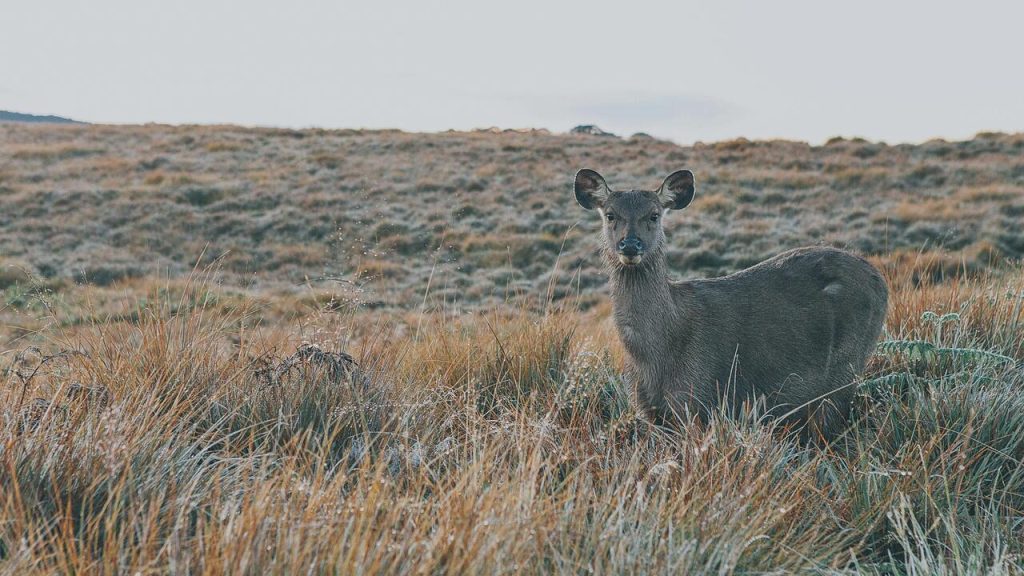
Perched on Sri Lanka’s highest plateau, over 2,100 meters ($\approx 7,000$ feet) above sea level, Horton Plains National Park is a world unto itself. A UNESCO World Heritage Site, this ethereal landscape is a stark and beautiful contrast to the tropical jungles and sun-drenched beaches found elsewhere on the island. It is a land of rolling grasslands, patches of dense montane cloud forest, crystal-clear streams, and misty, wind-swept vistas. The air here is crisp, cool, and pure, and the silence is broken only by the whisper of the wind and the call of a distant bird. Horton Plains is not just a place to visit; it is an experience that connects you to the raw, untamed beauty of nature. The park is most famous for its dramatic escarpment, World’s End, but the journey through its unique ecosystem is as captivating as the destination itself. It offers a glimpse into a prehistoric world of unique flora and fauna that have adapted to this challenging high-altitude environment.
The Main Trek: A Journey to the World’s End and Baker’s Falls
The primary activity in Horton Plains is the 9.5-kilometer circular trail that takes you to the park’s most iconic landmarks. It’s a moderately challenging walk that takes approximately 3-4 hours, leading you through the park’s diverse landscapes. The trail begins by meandering through the “plains”—vast expanses of golden-green patana grasslands dotted with solitary rhododendron trees.
The first major viewpoint is Mini World’s End, a dramatic cliff with a drop of about 300 meters ($\approx 1,000$ feet), serving as an appetizer for what’s to come. A further walk brings you to the main event: World’s End. This is a breathtaking sheer precipice with a staggering drop of nearly 880 meters ($\approx 2,900$ feet). On a clear morning, the view is simply phenomenal, stretching across the foothills of the southern plains all the way to the coast. The key is to arrive early, as by mid-morning (around 9-10 AM), a thick white blanket of cloud often rolls in, completely obscuring the view and creating the feeling of standing at the edge of a void.
From World’s End, the trail loops back towards the entrance, leading you through a beautiful stretch of cloud forest before descending to Baker’s Falls. Named after the famous British explorer Sir Samuel Baker, this powerful waterfall cascades over a series of rock ledges, surrounded by lush ferns and flowering plants. The spray from the falls is invigorating, and it’s a perfect spot to rest and absorb the serene beauty of the forest before completing the final leg of the trek.
Flora, Fauna, and Practical Tips
Horton Plains is a biodiversity hotspot. The forests are home to many endemic species. While the Sri Lankan Leopard (Panthera pardus kotiya) is the apex predator here, it is extremely elusive and rarely seen. The most common mammal you will encounter is the Sambar Deer, often seen grazing peacefully in large herds across the plains, unafraid of visitors. You may also spot Purple-faced Langurs and Wild Boar. For birdwatchers, it is a paradise, with endemic species like the Sri Lanka White-eye, Dull-blue Flycatcher, and the vibrant Sri Lanka Arrenga.
Best Time to Visit: The best time to visit is during the dry season from January to March when the skies are clearest, offering the best chance of an uninterrupted view from World’s End.
What to Wear: The weather is unpredictable and can change rapidly. Wear layered clothing—a t-shirt, a fleece, and a waterproof jacket. Sturdy walking shoes are essential.
Important Rules: To preserve its pristine environment, Horton Plains has a strict “no plastic” policy. Visitors are not allowed to bring plastic bottles or packaging into the park. Be sure to start your trek as early as possible (the park opens at 6 AM) to beat the crowds and the inevitable mist.


Write Your Review